Pre-Summer Personal Development
Email or call Veronica Russell, SSP’s volunteer coordinator and lead program developer, with any questions at (916) 488-6441.
Measure your growth and capture your reflections through this rubric, or in your own way!
Books to Read
(Recommended that you read 1-3 of these in advance of the summer.)
If you make purchases through Amazon, specify Sierra Service Project through Amazon Smile for 0.5% of our purchases to go to SSP!
Bible:
Read in order. This is based on the concept of Quadratos.
- Matthew (written from a storytelling voice – dealing with change)
- Mark (written moving through suffering)
- John (written as an expression of joy)
- Luke (written with an emphasis on social justice/giving, on maturing in service)
Youth Ministry
- Can I Ask That? by Brad Griffin
- Sticky Faith, youth worker edition by Brad Griffin
- Your First Two Years of Youth Ministry by Doug Fields
- Hurt 2.0: Inside the World of Today’s Teenagers by Chap Clark
- Speaking to Teenagers: How to Think About, Create, and Deliver Effective Messages by Doug Fields & Duffy Robbins
Reframing Christian Spirituality
- Blue Like Jazz by Donald Miller
- Red Letter Revolution by Shaine Claiborne & Tony Campolo
- The Irresistible Revolution by Shaine Claiborne
- The Way of the Heart by Henri Nouwen
- The Journey: A Spiritual Roadmap for Modern Pilgrims by Peter Kreeft
- This book has an emphasis in philosophy and ethics.
- Searching for Sunday by Rachel Held Evans
- Sacred Pathways by Gary Thomas
- Spoiler alert: you may see elements of this at staff training!
- Chronicles of Narnia by C.S. Lewis
- Ready any of these. This 7-book series is fiction that includes abundant biblical allegories.
Christian Service
- In the Name of Jesus by Henri Nouwen
- Tattoos on the Heart by Father Gregory Boyle
- This book is written by the founder of Homeboy Industries in Los Angeles.
Articles to Read
(As many of these as you’d like – they are short!)
- Relevant: The Most Neglected Spiritual Discipline – Note: please do not fast at SSP! Feel free to do so only before training, as part of your personal development and with careful consideration.
Podcasts
(As many of these as you’d like – most are 25 to 45 minutes long)
- Robcasts (Series by Rob Bell)
- Episode 8 – “The Enduring Relevance, Astonishing Power, and Unexpected Brilliance of the Bible”
- Episode 9 – “The Good Gift”
- Episode 12 – “The Morning After the Morning After”
- Episode 14 – “You Are Always With Me And Everything I Have Is Yours”
- Episode 16 – “19 Letters!”
- Episode 18 – “It Comes In Waves”
- Episode 20 – “The QUADRATOS Interview with Alexander Shaia”
Journaling Prompts
(Recommended at least every 1-2 weeks)
- Seasons: What season are you (your spirit) in, or entering right now? Spring (planting new seeds, celebrating new life/beginnings), summer (working the fields, toil), autumn (harvesting and celebrating bounty/the end of an era), or winter (death, struggle, isolation)? How might you leverage your current season to relate to youth this summer?
- Personal Walk: How does your personal walk relate to the SSP summer theme?
- Gifts: What are three ways you can use your gifts to share God’s love with youth and your fellow staffers at SSP?
- Journey: What kind of stage do you think you are in on your spiritual journey? Draw a timeline of your spiritual journey up to this point.
- Visual prayer: This is for times when it’s hard to find words. Write the names of people, joys, or concerns you want to pray for, and doodle around them as you lift them up to God.
- Your faith: What are your three core understandings about Jesus? God? What do you think he thinks about you? How might this inform how you share faith with youth this summer?
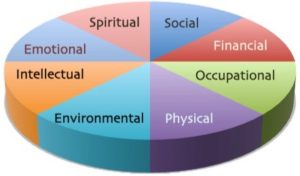
- Well-being: Fill out a “love tank” pie chart for the following areas of your life: emotional, intellectual, spiritual, physical, environmental, social, and financial. Which are most filled? Least? How can you maximize your resources to better fill the slices that are most empty?
- Being teachable: Find a leader in your life (teacher, pastor, mentor, etc.) and ask them what has allowed them to remain teachable and open to change while they lead – maybe when things don’t go exactly as planned, or when followers or students don’t want to cooperate. What did you learn? How can you apply this to your life, and the SSP summer as an SLC?
- “True fasting:” Read Isaiah 58. Journal prompt: What does true sacrifice mean? This is best done in conjunction after reading this article (#7) and in conjunction with activity #9.
Mentor Conversation Prompts
(Recommended at least once a month)
Note: These questions are for you to ponder and propose for discussion with your mentor about your own growth.
- What are your gifts? Your passion? Where do they come together?
- What are three tangible ways you are capitalizing on your gifts right now? If not, how could you start?
- What does need mean to you? Personally? Regionally? Globally?
- What gives you rest? How do you rest regularly? What does Sabbath mean to you?
- What does it mean to tend to a flock? Who is your flock now? Who will your flock be at SSP?
- Maximize your relationships: Do you have a Paul (mentor), Timothy (mentee), and Barnabas (encouraging peer)? How can you better seek guidance, offer mentorship, and enjoy your friendships? Discuss this after reading this article (#9).
- What is your internal monologue? How does that positively or negatively affect your image of God, others, or yourself?
- What are some of the ways Jesus speaks to his disciples? To crowds? How does he model what is good for them, without words? This may be best discussed after or while reading the four gospels in the Quadratos order mentioned above – Matthew, Mark, John, Luke.
- What does social justice mean to you?
- What does it mean to make disciples?
Practicing Solitude/Rest
(Recommended at least once a week)
- Lectio divina with your favorite scripture passage (read three times in a row, pausing for reflection between each reading). Psalm 23 is great for this exercise.
- Corpse pose for 10 minutes – lie flat on back with eyes closed and don’t move.
- Go on a walk or hike by yourself for 30 minutes (or longer!). Spend time in nature.
- Pray for your staff, SITs (Staff-in-Training), volunteer youth, and adult counselors before the summer.
- Do yoga for 15 minutes while meditating on a piece of Scripture. John 3:16, Romans 8:38-39, and Philippians 4:4-7, and Galatians 5:1 are some verses you might use.
- Exercise in a way you find enjoyable – running, swimming, playing volleyball, etc. Consider how your body is uniquely created for this activity.
- Meditate on one word – joy, peace, humility, contentment, etc.
- Fast for 24 hours, or from sunrise to sunset (DO drink water). Read Isaiah 58 in those times when you would normally eat, focus on God and pray for wisdom in how to be a servant/advocate for those who are “less-than.” Do this in conjunction with reading this article (#7) and journal prompt #9.